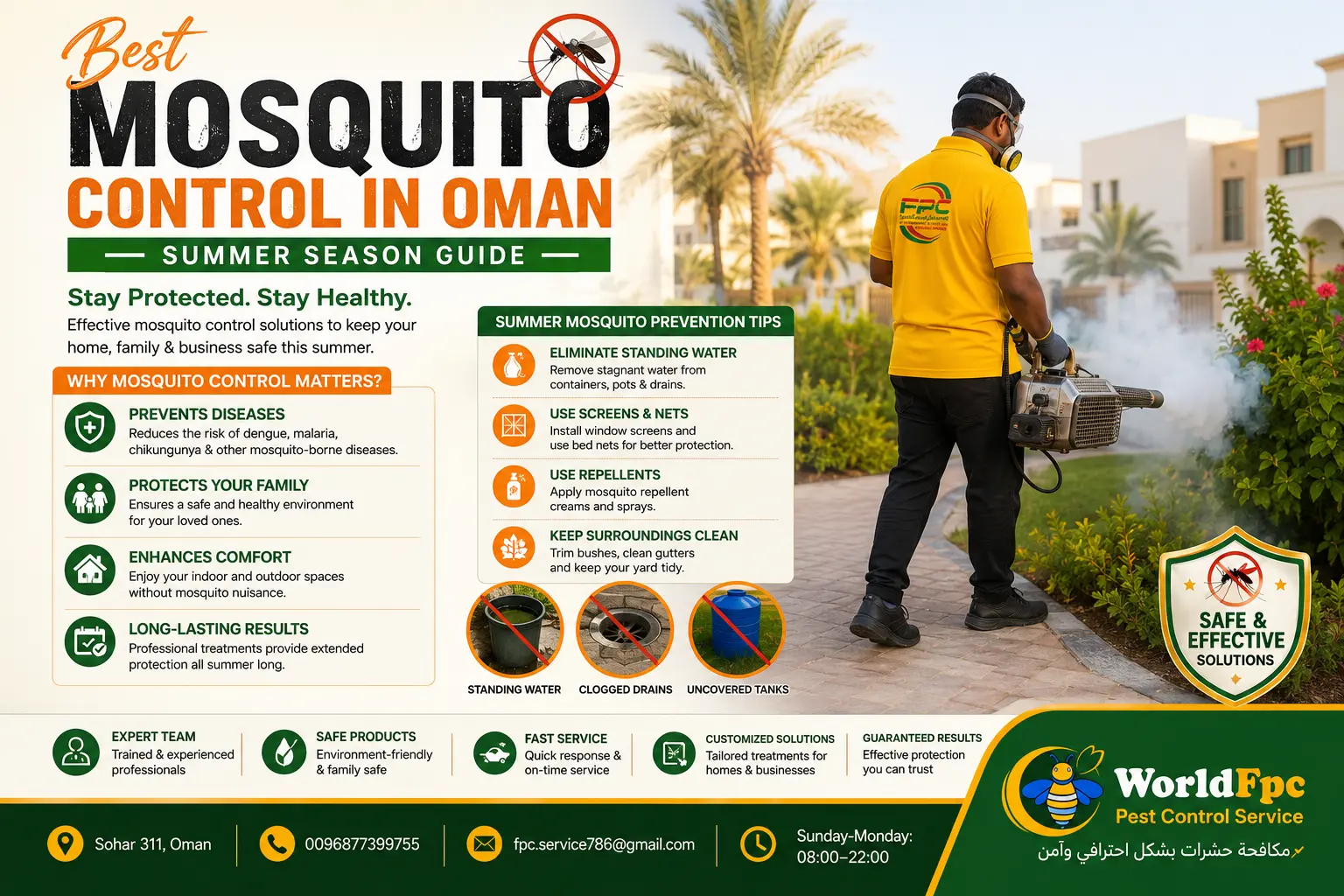
Summer in Oman brings heat, humidity, and a sharp rise in mosquito activity. Mosquito control in Oman becomes a household priority once temperatures climb and standing water starts collecting around homes, gardens, and terraces.
World FPC provides licensed mosquito control in Oman built for the local climate, using government-approved treatments that protect families, staff, and guests without disrupting daily life.
This guide explains why mosquitoes multiply so fast during Omani summers, the health risks they carry, and how a professional treatment plan from World FPC keeps your property protected through the season.
Why Mosquitoes Thrive During Oman’s Summer Season
Oman’s summer combines high humidity with frequent irrigation, pooled water near air conditioning units, and warm nights. These conditions create ideal breeding grounds for mosquitoes across Muscat, Salalah, Sohar, and Nizwa.
Female mosquitoes lay eggs in even small amounts of standing water. A blocked drain, an uncovered water tank, or a saucer under a plant pot can produce hundreds of new mosquitoes within a week during peak summer heat.
Urban growth also plays a role. New construction sites, irrigation canals near farms, and coastal humidity in cities like Sohar and Salalah give mosquitoes more shelter and moisture than drier inland regions.
Peak Activity Hours in Omani Homes
Mosquitoes in Oman are most active during dawn and dusk, roughly between five and seven in the evening. They rest in shaded, humid spots during the day, including behind curtains, under furniture, and inside bathrooms.
Understanding this pattern helps homeowners time their prevention efforts. Closing windows before sunset and checking shaded corners regularly reduces indoor mosquito presence significantly during the hottest months.
Health Risks Linked to Mosquitoes in Oman
Mosquito bites cause itching and disrupted sleep, but the bigger concern is disease transmission. Certain mosquito species found in the Gulf region can carry dengue, chikungunya, and in rare cases malaria.
While Oman does not report widespread outbreaks, the Ministry of Health has recorded seasonal dengue cases in southern governorates, particularly following heavy rainfall. Risk increases in humid, densely populated neighborhoods with poor drainage.
Children, elderly residents, and people with weaker immunity face higher complications from mosquito-borne illness. This makes consistent mosquito control in Oman a health measure, not just a comfort upgrade for the home.
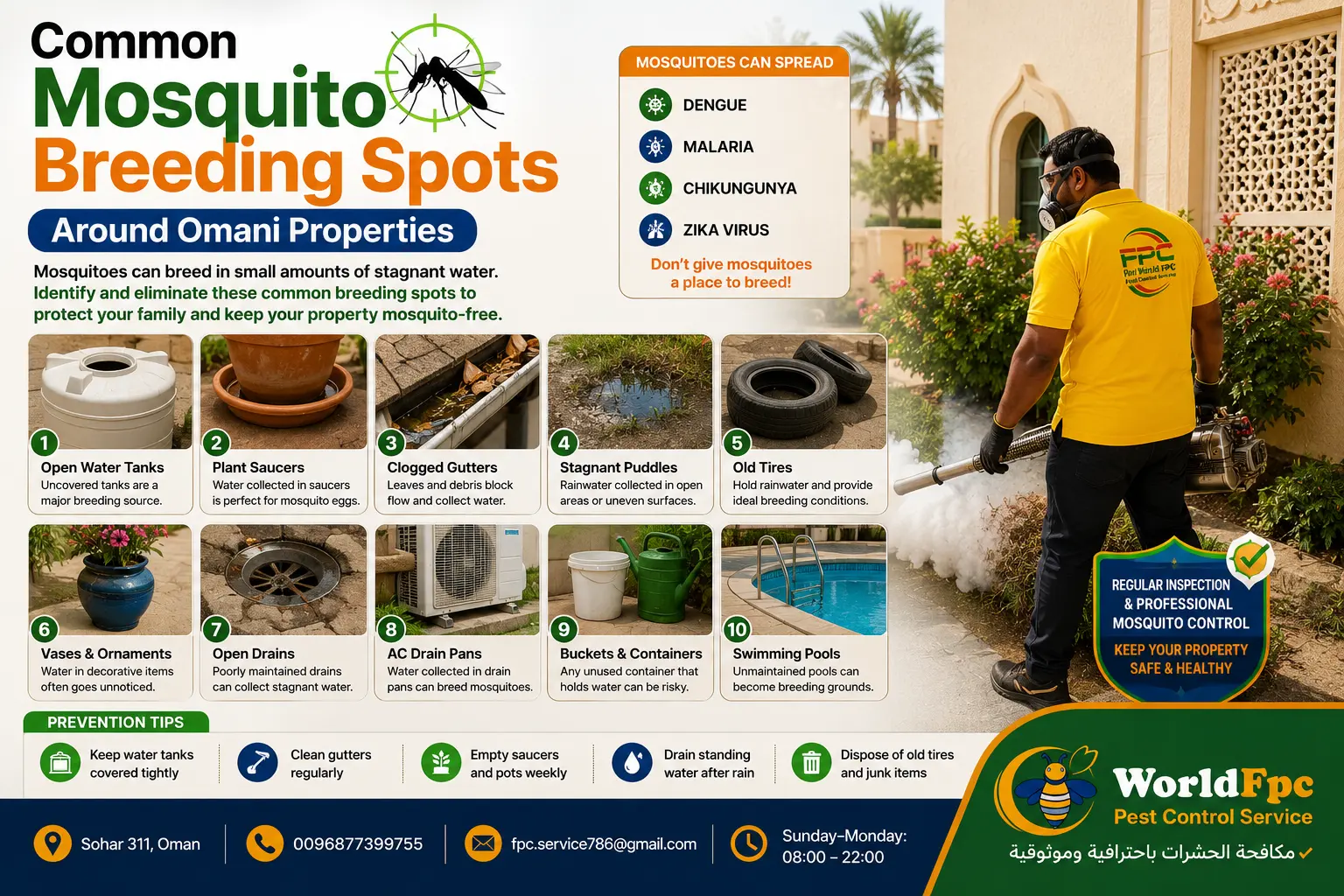
Common Mosquito Breeding Spots Around Omani Properties
Most infestations trace back to a handful of overlooked spots. Identifying these locations is the first step before any treatment plan, and our technicians inspect every one during a site visit.
- Uncovered water tanks and rooftop storage tanks
- Blocked gutters, drains, and air conditioner drip trays
- Plant pot saucers, garden ponds, and flowerbeds
- Old tires, buckets, and construction debris holding rainwater
- Swimming pools without proper chlorination or covers
Each of these breeding sites needs a different response. Some require larvicide treatment, others need physical removal of stagnant water, and pools need a chemical balance check alongside surface treatment.
Mosquito Species Commonly Found in Oman
Three mosquito species dominate Omani neighborhoods. Culex mosquitoes breed in polluted standing water and are the most common nuisance biter. Aedes mosquitoes, active during daylight, are the species linked to dengue and chikungunya.
Anopheles mosquitoes, the malaria vector, prefer cleaner, slow-moving water near irrigation channels and are less common in urban Muscat but appear more frequently in rural and agricultural zones. Identifying the species guides the correct treatment approach.
Real Example: A Villa Treatment in Al Khoud
A family in Al Khoud contacted World FPC after noticing mosquito bites every evening despite closed windows. Inspection revealed a cracked rooftop water tank and a neglected garden pond feeding larvae into the property daily.
Technicians drained and sealed the tank, applied larvicide to the pond, and fogged the garden perimeter. A follow-up visit three weeks later confirmed no active breeding sites, and the family moved to a six-week seasonal maintenance plan for the rest of summer.
This example shows why inspection matters more than spraying alone. Treating symptoms without finding the breeding source usually brings mosquitoes back within days.
Common Myths About Mosquito Control in Oman
Many households believe citronella candles or plug-in repellents solve an infestation. These products reduce bites in a small radius but do nothing to stop breeding, so the underlying population keeps growing outdoors.
Another myth is that mosquitoes only appear near farms or open desert. In reality, dense residential areas with irrigation, pools, and poor drainage often see higher mosquito density than rural land with dry soil.
Some also assume one treatment lasts the entire summer. Adult mosquitoes migrate from nearby properties, so ongoing seasonal maintenance gives far better results than a single fogging visit.
World FPC’s Mosquito Control Process in Oman
World FPC follows a structured, four-stage process for every mosquito control booking in Oman. This keeps results measurable and gives clients a clear understanding of what happens on-site.
Stage One: Free Site Inspection
A trained technician visits your property to locate breeding sites, assess humidity levels, and check surrounding drainage. This inspection covers indoor spaces, gardens, water tanks, and shared building areas where applicable.
Stage Two: Customized Treatment Plan
Based on the inspection, World FPC designs a plan combining adult mosquito fogging, larvicide application in standing water, and residual surface spraying in resting zones like shaded walls and drains.
Stage Three: Government-Approved Application
All chemicals used meet Omani regulatory standards for safety. Treatments are odorless where possible, and technicians explain drying times so families and pets can return to treated areas safely.
Stage Four: Follow-Up and Seasonal Maintenance
Mosquitoes are migratory pests, so a single visit rarely solves the problem long term. World FPC offers seasonal maintenance contracts with scheduled visits every four to six weeks through the summer months.
Mosquito Control for Villas, Apartments, and Commercial Properties
Villas with private gardens need broader outdoor coverage, including perimeter fogging and larvicide treatment in irrigation zones. Apartment buildings benefit from shared drainage and rooftop tank inspections that individual residents cannot access alone.
Commercial properties such as restaurants, hotels, schools, and clinics in Muscat and Salalah require documented treatment records for health inspections. World FPC provides service reports that meet compliance requirements for commercial clients across Oman.
Seasonal Comparison: Summer, Khareef, and Winter Mosquito Activity
Summer heat drives mosquito breeding through standing water near irrigation and cooling systems. Salalah’s Khareef season, roughly June through September, adds heavy monsoon rainfall that dramatically increases breeding sites across the Dhofar region.
Winter months bring lower humidity and cooler nights, which slows mosquito reproduction across most of Oman. However, indoor breeding near heated water tanks can still occur, so year-round monitoring remains useful for high-risk properties.
Prevention Checklist for Oman Households
Professional treatment works best alongside basic household prevention. World FPC recommends these steps between scheduled visits to extend treatment effectiveness through the summer season.
- Empty and scrub plant pot saucers weekly
- Cover water storage tanks and check for cracks
- Clear gutters and air conditioner drip lines regularly
- Install fine mesh screens on windows and doors
- Keep garden areas trimmed to reduce shaded resting spots
Combining these habits with professional fogging and larvicide treatment gives Omani households the strongest defense against summer mosquito surges.

Why Choose World FPC for Mosquito Control in Oman
World FPC operates with licensed technicians trained in Integrated Pest Management, using products approved under Omani pest control regulations. Every treatment plan is documented, and every technician is background-checked before joining a client site.
Our team serves Muscat, Salalah, Sohar, Nizwa, and surrounding governorates with flexible scheduling, including emergency response for sudden infestations after heavy rainfall or new construction activity nearby.
Transparent pricing, upfront quotes, and no hidden fees set World FPC apart from providers who add charges after the visit. Clients receive a written estimate before any treatment begins.
Safety for Families and Pets
All World FPC treatments use pet-safe and child-safe formulations wherever available. Technicians walk residents through re-entry times and any precautions needed for the hours following treatment.
How Much Does Mosquito Control Cost in Oman
Pricing depends on property size, the number of breeding sites identified, and whether the service is a one-time visit or a seasonal maintenance contract. Villas with gardens typically cost more than single apartments due to outdoor coverage.
World FPC provides a free inspection before quoting, so clients know the exact scope and price before committing. Seasonal contracts often reduce the per-visit cost compared with booking single treatments repeatedly.
Book Mosquito Control in Oman This Summer
Mosquito activity peaks fast once summer heat and humidity set in. Booking early gives World FPC time to treat breeding sites before populations grow, which reduces both cost and risk for your household or business.
Call World FPC today, request a free inspection, and get a tailored mosquito control plan built around your property and Oman’s summer climate. Same-week appointments are available across Muscat and Salalah.
Frequently Asked Questions
Is mosquito control safe for children and pets in Oman’s heat
Yes. World FPC uses government-approved, low-toxicity formulations and provides clear re-entry guidance after each treatment so families and pets stay protected without long waiting periods.
How often should mosquito control be done during summer
Most Omani households need treatment every four to six weeks during peak summer and Khareef season. Properties near irrigation, farms, or standing water may need more frequent visits.
Do mosquitoes in Oman actually spread disease
Certain species can carry dengue and chikungunya, with occasional seasonal cases reported in southern governorates. Malaria transmission is rare but not impossible, which is why consistent prevention matters.
Can I treat mosquitoes myself without a professional
Basic prevention like removing standing water and using screens helps, but persistent infestations usually need professional larvicide and fogging treatment to reach hidden breeding sites effectively.
Which areas in Oman does World FPC serve
World FPC provides mosquito control across Muscat, Salalah, Sohar, Nizwa, and nearby governorates, with emergency response available for urgent infestations after rainfall or construction disturbance.
What makes summer the worst season for mosquitoes in Oman
Heat combined with humidity and stagnant water from irrigation, cooling units, and rainfall creates rapid breeding conditions, making early summer the best time to schedule preventive treatment.